
MOLINA-MORENO

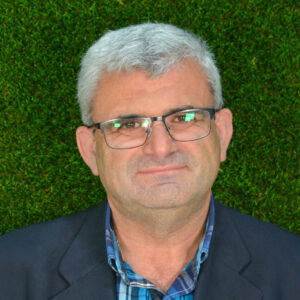
Valentín Molina Moreno

Full Professor of Business Organization, University of Granada

Valentín Molina Moreno is a Full Professor of Business Organization at the University of Granada, specializing in circular economy, and sustainability in business management. He combines teaching, research, and knowledge transfer with national and international collaboration.At the international level, he has taught at universities in various countries across the European Union, the Balkans, the Caucasus, and Latin America, mainly within official Master’s and PhD programs related to his research fields.

His main research areas are the circular economy,  corporate social responsibility,  and sustainability with significant scientific contributions in the latter, particularly in designing indicators for measuring and evaluating circularity in sectors such as construction, water, and logistics distribution. Quantitatively, his academic output includes more than 100 contributions to national and international conferences and over 50 research articles in indexed scientific journals. His research metrics include 2.951 citations, an H-index of 28, and an i10-index of 52 on Google Scholar. He has received two international research awards related to circular economy and sustainability and has been granted three six-year research periods two for research activity and one for research transfer. He is also recognized with five research periods awarded by the Regional Government of Andalusia.

He has also supervised four doctoral theses since 2005, participated as a member of 22 doctoral thesis evaluation committees, and supervised  75  Master’s theses, three of them international. Additionally, he has completed 28 teaching and research stays at various universities in Latin America and Europe, funded through competitive calls. He has also participated, and continues to participate, in several national and international R&D projects.

Implementing Circular Economy to Improve Swine Sector Health: A Comprehensive Framework

The forecast indicates a significant increase in pig meat production in next years due to its high global consumption rate. It can be considered that each pig generates approximately between 4 and 8 L of wastewater per day, with an estimation of 778 million heads for worldwide swine population in 2023. In light of this, swine wastewater, containing swine excrements and water from cleaning of pig sheds, constitutes an environmental threat through eutrophication, acidification, greenhouse gas emissions and global warming. Thus, an inadequate management of this effluent could cause soil, water and air pollution as well as potential risks to human health and local wildlife.

Circular economy model intends to lessen these negative externalities by turning waste into new resources which could be reintroduced into the productive system. In this regard, swine wastewater could be considered as a technological nutrient which enables to recover the resources contained in it, such as water, nutrients and energy, by proper treatments. The design and implementation of indicators of circular economy in livestock husbandry could evaluate the degree of approximation of this sector to the circular economy model and supply information of interest to the production managers that contributes to improve carbon and water footprints. Consequently, these indicators could convert pig farming industry into a reference of sustainable production by improving the efficiency of the use of resources and reducing waste generation, complying with legislation of the European Union and fostering the enhancement of swine sector health.